
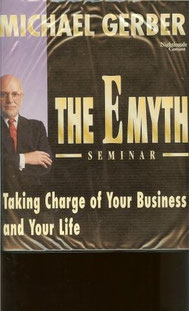
The author describes the problems experienced by most startups and entrepreneurs. They make the company about them and their passion. They "give themselves a job" as a technician, a do-er in
their company. That results in burn-out as a company based on the talents of an individual can't be sustained. Since the company is about the person or the product, its capacity to sustain itself
is based solely on the individual. I think about 2 restaurants, first my Uncle Frank's in Mystic Connecticut. It was dependent on him and a few others to sustain - it was a family business
providing an income and service to the community. Everyone could and did contribute but it ended with him. Then, in Leon Panetta's book Worthy Fights, he characterizes his growing up with parents
running a family restaurant and the opportunities it created. The result wasn't more restaurants or even sustaining the one. Rather it was using the funds to purchase property in
post-war California developing a rental market in a military community and getting out of the restaurant business. Neither is better than the other, but I use them as models of how they used the
concepts discussed in this book. Neither really did and neither created a sustainable business beyond themselves except that property in Carmel Valley California became very valuable and left a
legacy of wealth for the Panetta family. Right place, right decisions and the right time.
Michael Gerber discusses the three personalities and how to be each one: the Entrepreneur; the Manager and the Technician. How companies are most often started by Technicians who want to
execute their craft, their way. And how this can't scale or sustain until the Technician steps back and determines that they aren't the business, neither is their product. The business is the
business. To create value there must be a product and a repeatable process for delivering that product that can be done by the "least skilled person possible". This, the author contents is the
way to creating a valuable company that can scale and succeed. And notes that not doing this results in frustration and failure. Working ON your business means creating organizations the result
in improvements through innovation - things that make your product/service different and valued by the customer. Along with a means of sustaining and improving on it through Innovation. Second is
a means of Quantifying your value by creating and tracking metrics to test Innovations value when implemented. Third is Orchitestration focusing on managing and sustaining the
business.
Despite my aversion to "process" I can see the value in creating standards for delivery and the strength that comes from knowing work is defined and your team knows how to get it done. For me
this is helpful in 2 ways, first since I'm often a technician - solutions I create don't live beyond my involvement. Second, as my skills wain, I need to count on others and create 'systems' for
their success so that I can take on greater roles and realize corresponding success. Good advise on how to view your business, understanding what limitations you have as an individual
in running, delivering and sustaining your business. Good for both entrepreneurs as well as business leaders in larger organizations to know how you can contribute through others to broaden your
impact.
Write a comment