
Book Review: Mark Chernow Hamilton part 1, half way through
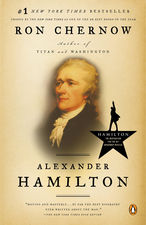
The broadway play is coming to Denver next year, I wanted to be prepared knowing the back story. Hamilton sounds like a prodigy. I’m half way through now, covering his upbringing, his parents situation and his becoming an orphan in St. Croix at age 14. Becoming a clerk for a local accountant, he began to understand trade, smuggling and customs. The West Indies are a major sugar producer, called white gold, it was in high demand. The West Indies were also a port of entry for African Slaves necessary for the sugar production. Hamilton saw all this and likely formed his abolitionist stance early on.
Beginning to write for local newspapers, he is noticed for his advanced ideas and offered a scholarship in a northeastern college. Choosing between Princeton and Kings college, he chose the later entering at the old age of 18. Most students entered at age 12 or 13. But Hamilton, smallish and delicate fudged his age to 15 and began his studies. Ambitious and seeking fame, he joins the Patriots as an infantry officer as part of the New York regiment. Distinguishing himself both as an officer and an intellectual knowing multiple languages. He is reassigned to Washington’s staff for 4 years. Not satisfied, he longs to further distinguish himself in combat and forces Washington to allow him to assume command as a Colonel leading an artillery commander earning fame in Yorktown establishing himself as a Revolutionary war hero at the age of 25. Pretty incredible.
Following the war, he observes the elite are in the law profession, not taking the traditional route by clerking for an established lawyer, he’s self-educates himself and passes the bar establishing his own practice in New York City. Marrying into a leading New York family, the Schuyler’s.
Incredible man with intellect and ambition. He was both lucky and opportunistic he rose to the top of American power and influence all by the time he was 32 years old.
Making of a smart home

Home automation through the use of remotes, light timers and motion sensors has always been interesting to me. Combining this with some of the newest technologies from leading Tech companies, I wanted to jump in. While still early days IMO, we’re a long way from the complexity of X10 technologies. Wanting to step in with a system compatible with *most* technologies, I chose the Lutron Caseta system since it worked with both my security system and Apple’s HomeKit. Also supported by automation scripting capabilities like IFTTT, I figured I’d have a lot of options.
Replacing four switches with Caseta dimmers, I can now remotely control and automate lighting in my home. I also added a couple more manual dimmers in locations that I didn’t think automation would be needed. I can imagine a day when its normal for entire houses are connected realizing that its already happening. Pretty incredible how fast this technology is maturing. The installation was easy, same as replacing any light switch. I needed new switch plates. Something we needed anyway since the existing ones are pretty basic. The manual controls allow you to use them immediately. But Caseta requires a smart hub to enable automation and remote control. My first hub worked with the luton app and my security system but wasn’t the version that worked with HomeKit even though the model # and box said it did. Returning and purchasing a new one corrected this.
Book Review: Jennifer Keishin Armstrong Seinfeldia

Behind the scenes view of the story focusing on its reflection of real life experiences of Larry David and Jerry Seinfeld at the beginning and then of the writers as it gained traction and was picked up. The book focused on the cultural impact its had, how it lasted 9 years. the decision to stop and the lasting affect its had 18 years since. The stories are well know since I also keep 7 episodes on my DVR to watch regularly. Though dated, its still funny and fun to watch. Finding the @Seinfeld2000 and @SeinfeldToday Twitter feed and learning the stories behind them is a great way to laugh about the show today imagining new stories that ring true to real life.
Commentary: Chalmers Johnson Blowback: The Costs and Consequences of American Empire
Makes a lot of cases for American imperialism and unfair treatment of emerging countries. Johnson presents the American version of colonialism and the results we're experiencing in our relationships with other countries around the world. Johnson is specific interpreting American actions from our history from the perspective of the local domestic population.
Note: I did not complete the book, just half. The aggressive, argumentative tone of the book made it difficult to keep reading.
Book Review: Mark Greaney Commander in Chief

Set in 2016 it imagines a Russian, Putin type character dealing with a struggling economy hurt by falling oil prices and economic sanctions because of their take over of the Eastern half of Ukraine including Crimea.
The ‘spy stuff’ deals with money laundering and investment schemes by Russian oligarchy, specifically “Velodin” moving his $8B in personal wealth as insurance in case things go south. Velodin, to gain stature, he threatens Lithuania in order to secure controlled access to Russian access to Kaliningrad. The geo-politics resemble our current situation.
The political-stuff deals with Jack Ryan as the US President building a case for NATO involvement to protect and defend the new member state. He describes the supposed/likely reactions from different member states focusing on passive countries like Denmark, US Allies like Great Britain and practical responses like Germany. In the end, the US is going it alone. Positioning troops from the region in Lithuania in advance of a full-on invasion. The battle turns out to be traditional kinetic tank battle with the specter of nuclear war with advanced submarines positioned off the US East coast.
It tells a tale of what could be, entertaining and reflective of our current world situation.
Book Review: Fareed Zakaria The Post American World
The Post American World is an optimistic book about the rise of what we considered before as "emerging countries". The Rise of the Rest is the subtext. Their influence is changing geo-politics and the world economy. The US needs to pay attention, cooperate and maintain our own strong economy to remain relevant in this changing world. The book creates a tension between nationalism and globalism that isn't resolved. Both are strong forces, the US remains the model but other cultures interpret and implement their own versions. This view coupled with Chalmer Johnson's presentation of past US interference in other nations paints a picture of warning that dictates that we should focus on our own economy and establish peer relationships for mutual benefit in order to maintain our position of influence. Free trade is at the center but also is the need to have a strong economy at home. Not covered are the content details of these agreements. (My opinion) Free trade works when all are playing by the same rules with the same abilities as an economy. I wonder why each president, regardless of party pushes free-trade agreements such as NAFTA and TPP and if their content is similar. What makes these essential to each president but controversial to legislators at the same time?
Book Review: Joseph Wheelan Jefferson's War America's First War on Terror 1801-1805
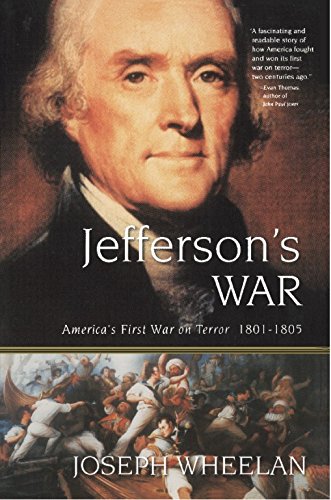
Book Review: Richard Zaks: The Pirate Coast, Thomas Jefferson, the first Marines and the Secret Mission of 1805
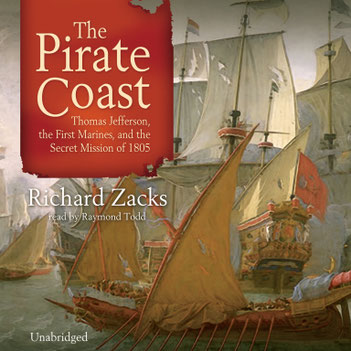
Thoughts on America’s first foreign war
Review: Stephen Ambrose: Undaunted Courage, the story of Lewis and Clark
- Their preparation, learning what they brought, what was available to them and how they used it.
- What they expected, thinking there were mammoth's, that the western range, the Rockies had similar traits to the Appalachians, their expectations of the natives
- Thomas Jefferson's political realities and personal motivations and methods
- The medicine they used
- What and how they ate
- Their reception and observations of natives relative to their expectations. How they changed.
- The realities of slave ownership
- Their description of the geography given their 18th/19th century world views